
Loft Insulation Vs Energy Saving Hacks
Posted 21.10.2022 by HappyLoft
With UK Energy Bills absolutely through the roof in 2022, there are lots of little helpful blogs springing up giving you energy saving hacks and tips for the home in an effort to educate us all on keeping more of our cash by using less energy – quite right, too.
While well intentioned, for most of us these energy saving hacks feel like “trying to fill a holey-bucket with water” in the face of some pretty monumental price rises.
But combination and genuine energy saving solutions do exist. Let’s take a look at some of the most common energy saving tips in comparison to getting loft insulation, using data from the Energy Saving Trust.
Switching your appliances off instead of standby
Estimated Saving: £65 per year
Keeping all of your appliances on Standby-Mode might seem convenient, but in most cases (apart from a little longer to start some appliances such as TVs or computers) you’re only reducing your own work load by just 1 button press.
However, many devices and appliances burn a whole load of juice even in sleep mode, and taking that extra moment to consider whether or not it will be used for a while and turning things off at the mains can save the average household around £65 per year.
Running Total:
£65
Turning off the lights
Estimated Saving: £25 per year
Yup – you heard that right Dads. All that moaning at your kids to turn off the lights when the room isn’t in use may only save the average household around £25 on their yearly energy bill. Is it worth doing? Sure, we’re all for economical use of energy and against waste, but all that hot air you expend shouting about it may not be saving you as much as you thought.
Running Total:
£90
Daught Proofing Gaps
Estimated Saving: £125 per year
The biggest saving on this list, draught-proofing is less of an energy-saving hack and more of a no-brainer. If you have strong draughts that sap warm air from your living spaces then using suitable draught-proofing materials and techniques makes perfect sense, and could save you around £125 per year in an economic climate where every penny counts.
Running Total:
£215
Wash clothes at 30 degrees and reduce wash cycles by 1 per week
Estimated Saving: £34 per year
Less heat, less energy, less pennies spent on your washing. Simple? Yes. As effective at cleaning your clothes? Maybe, unless seriously stained. Either way, this reduction should knock off around £34 from the average annual energy bill.
Running Total:
£249
Tumble Dryer Dodging
Estimated Saving: £70 per year
Making things hot costs energy, as does making things move at high-speed. Your tumble dryer likely does both and often for hours at a time, and so it’s no surprise that the estimated savings from dryer dodging can be around £70 per year. However, hanging things up the old fashioned way in Winter can have its costs elsewhere in the house if ventilation is inadequate, adding moisture to the air which can encourage mould growth.
Running Total:
£319
4 Minute showers and bath bans
Estimated Saving: £115 per year
Combined, taking 4 minute showers could save you £95 per year, while swapping one bath a week for a shower could be another £20 per year. Not bad, but again, not much more than a weekly shop in this climate.
Running Total:
£434
Frugal and Efficient Kettle Use
Estimated Saving: £43 per year
When we think about energy use in the kitchen we often think about the oven and hob, but our kettles use a huge amount of energy, and it’s often wasted through overfilling.
Just put the water in you want to use, rather than paying to heat up water only for it to sit in the kettle and go cold.
Running Total:
£477
Dishwasher Dark Arts
Estimated Saving: £17 per year
Efficient stacking and cycle selection of your dishwasher resulting in a net reduction of 1 dishwasher cycle per week should net you a saving of around £17 over the year.
Running Total:
£494
Hot Water Cylinder
Estimated Saving: £70 per year
If your home is fitted with a hot water cylinder (rather than using a combi boiler) then it could likely benefit from insulation. Hot water is produced by the boiler and then stored in the hot water cylinder, but overtime this will cool. A layer of insulation could net you around £70 per year in savings.
Running Total:
£564
But hang on a second...
You can see that the running total of potential savings in this blog have now reached a total savings potential of £564 per year, at the cost of making changes to the everyday lives of you and the rest of your household.
We’re not saying that you shouldn’t deploy as many of these energy saving hacks as possible – we’ve said before, we’re all for it, but we also feel obliged to make the following comparison.
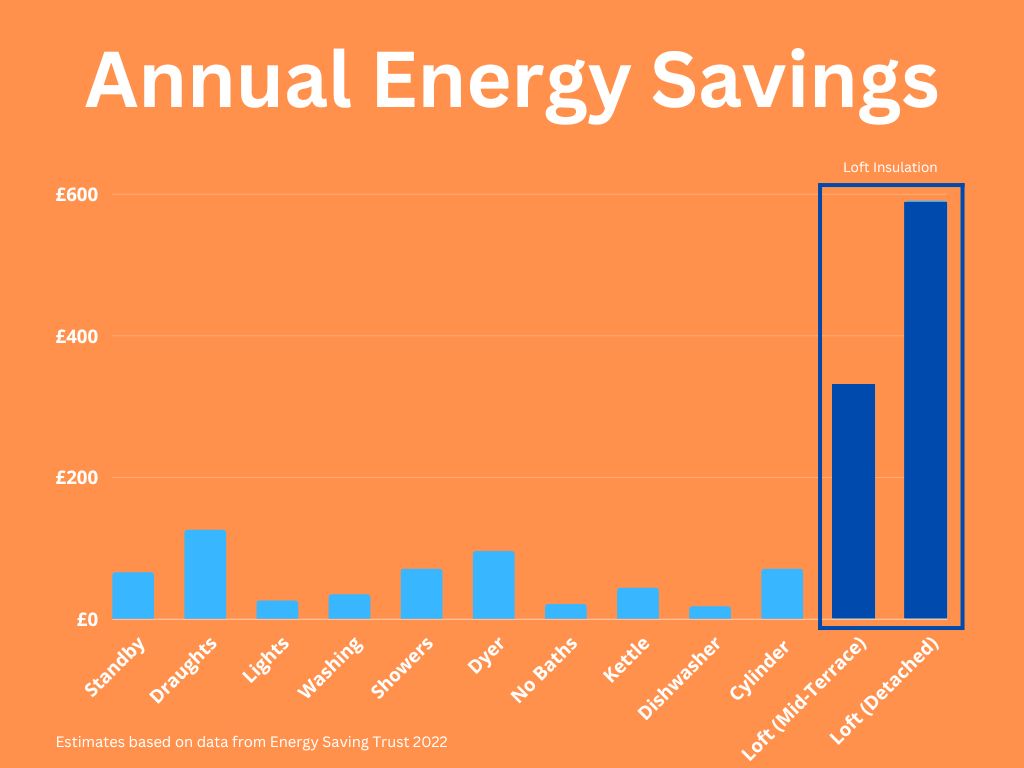
Loft Insulation is the King of keeping you warm
Estimated Saving: £330-590 per year
The same source of data for these energy saving hacks also says that installing loft insulation in your home could save you between £330 pounds (mid-terrace) and £590 (Semi-detached or bungalow) despite costing on average between £455 and £600 to install.
This means that because of current energy bills, lost insulation could pay you back in energy bill savings in just over a year!
The question now becomes – can you afford NOT to have loft insulation installed?